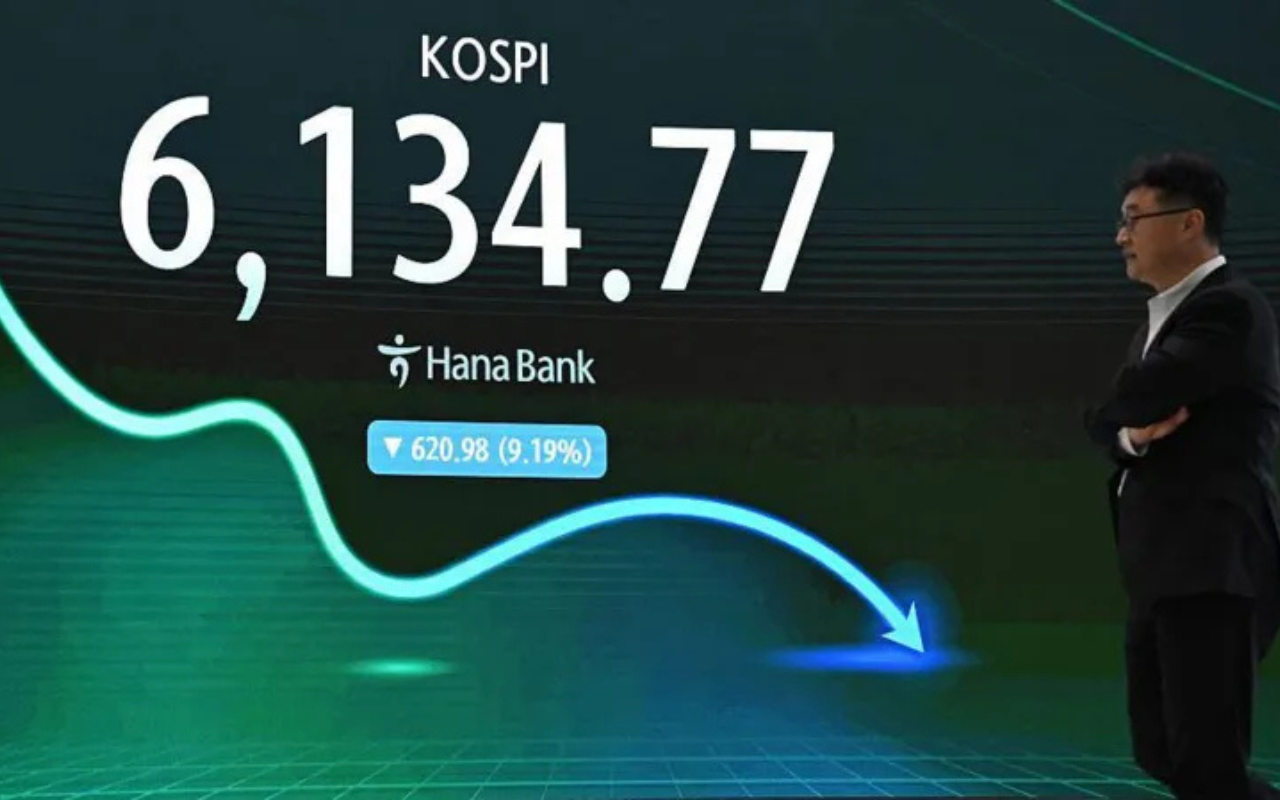
A wave of selling swept through global semiconductor stocks on Tuesday as investors grew increasingly cautious about the outlook for artificial intelligence-related spending, triggering steep losses across major technology markets.
Table of Contents
ToggleSouth Korea was among the hardest hit. The benchmark Kospi index plunged sharply during morning trading, forcing exchange operators to activate a temporary 20-minute trading halt after the index dropped more than 8%. Selling resumed once trading restarted, with the benchmark extending losses to around 10% as technology shares remained under pressure.
Samsung and SK Hynix Among Biggest Losers
The downturn was led by South Korea’s largest semiconductor manufacturers. Samsung Electronics and memory chip producer SK Hynix both suffered double-digit percentage declines as investors reduced exposure to companies closely tied to the AI boom. Their losses weighed heavily on the broader market because the two firms account for a significant share of the country’s stock index.
The weakness spread beyond South Korea. Semiconductor-related shares in Japan and Taiwan also moved lower, reflecting broader concerns across Asia’s technology sector. U.S.-listed chipmakers came under pressure as the market anticipated continued volatility when Wall Street opened.
Investors Reassess AI Growth Expectations
The latest sell-off reflects growing uncertainty over whether the rapid pace of investment in artificial intelligence infrastructure can be sustained. After months of strong gains driven by optimism surrounding AI data centers and advanced chips, investors are increasingly questioning future demand and profitability.
Market sentiment has also been affected by signs of intensifying competition within the semiconductor industry. Developments involving Chinese memory chip manufacturers and advances in domestic chip technology have raised concerns about future pricing pressure and global supply dynamics.
Volatility Returns to Technology Markets
The decline highlights how closely global equity markets remain tied to expectations surrounding artificial intelligence. Semiconductor companies have been among the strongest performers during the AI rally, making them particularly vulnerable when investor confidence weakens.
Analysts note that chipmakers remain central to the expansion of AI computing, but recent trading suggests investors are becoming more selective as they evaluate company valuations, earnings prospects and the pace of future AI infrastructure spending.
What Investors Will Watch Next
Attention is now turning to upcoming corporate earnings and business outlooks from major technology companies, which could provide clearer signals about demand for AI hardware in the months ahead. Investors will also closely monitor spending plans from large technology firms and any further developments in the global semiconductor industry that could influence supply, competition and long-term growth.
For now, the sharp retreat in chip stocks underscores a shift in market sentiment, with investors moving cautiously after a prolonged period of enthusiasm surrounding artificial intelligence-related investments.