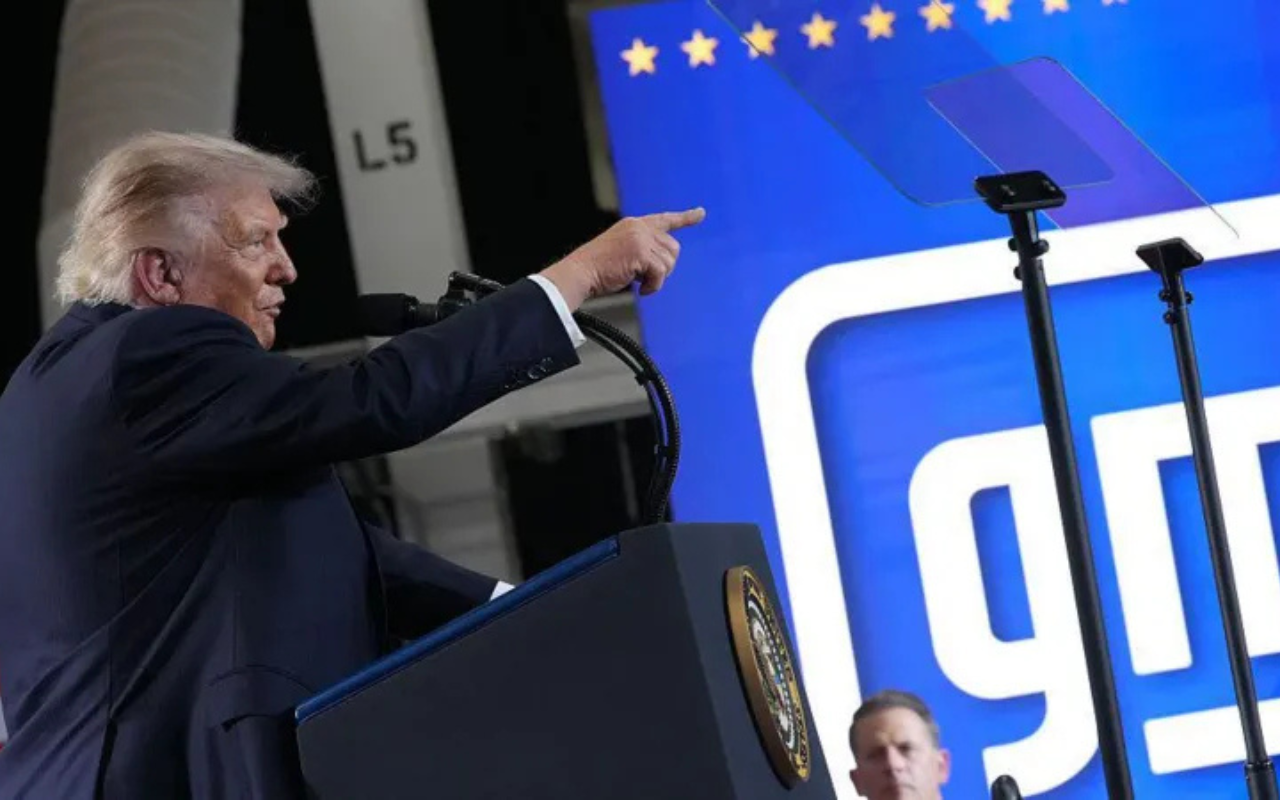
President Donald Trump used a visit to Michigan on Monday to defend his administration’s tariff policy, arguing that higher import duties are strengthening U.S. manufacturing and encouraging companies to expand production at home.
Table of Contents
ToggleSpeaking at a General Motors facility in Milford, Trump described his tariffs as a driving force behind renewed investment in American industry. He said the measures are encouraging businesses to shift manufacturing from overseas to the United States, particularly in the automotive sector, which remains central to Michigan’s economy.
The appearance carried both economic and political significance. With the 2026 midterm elections approaching, Trump has increased campaign-style events in competitive states as Republicans seek to maintain momentum ahead of key races.
Economic Challenges Continue in Michigan
While the president highlighted manufacturing investment, Michigan continues to face economic headwinds.
The state has experienced slowing job growth and remains among the states with relatively high unemployment, raising questions about whether the benefits of the administration’s trade policies are reaching workers as quickly as promised. Critics argue that tariffs have increased costs for manufacturers that rely on imported components, while supporters maintain the measures will deliver long-term gains by encouraging domestic production.
Michigan’s economy is closely tied to the automotive industry, making it especially sensitive to changes in international trade policy. Automakers operating across North America depend on integrated supply chains that move parts and vehicles across the U.S.-Canada border.
Canada Trade Dispute Adds Pressure
Trump’s remarks came as the administration prepared for another escalation in its trade dispute with Canada.
The president has defended plans for higher tariffs on Canadian imports, arguing they are necessary to protect American industry and reduce trade imbalances. The measures have increased tensions between Washington and Ottawa, with Canada continuing to oppose the tariffs and warning of their impact on businesses and cross-border trade.
Because Michigan shares one of the busiest commercial borders with Canada, any additional trade restrictions could have significant implications for manufacturers, suppliers, and exporters that rely on uninterrupted cross-border commerce.
Midterm Elections Shape the Political Message
The Michigan stop also reflected the administration’s broader political strategy as campaigning intensifies before the November midterm elections.
Trump used the event to promote his economic record and rally Republican supporters, portraying tariffs as a central pillar of his “America First” agenda. At the same time, Democrats have pointed to economic pressures, including concerns over inflation and manufacturing costs, as they seek to challenge Republican candidates in battleground states.
What Comes Next
Trade relations between the United States and Canada remain under close scrutiny as both governments continue to navigate one of the most significant economic disputes between the neighboring countries in recent years.
With additional tariff measures expected and election campaigning accelerating, the effectiveness of Trump’s trade strategy is likely to remain a major issue in both economic policy debates and the political battle leading into November.