The arrival of basking sharks along Ireland’s western coastline has become an eagerly anticipated annual event, drawing wildlife enthusiasts, photographers and marine conservation supporters to County Mayo. Around Achill Island, these enormous fish often cruise surprisingly close to shore, allowing visitors to witness one of the world’s largest shark species in its natural habitat.
Table of Contents
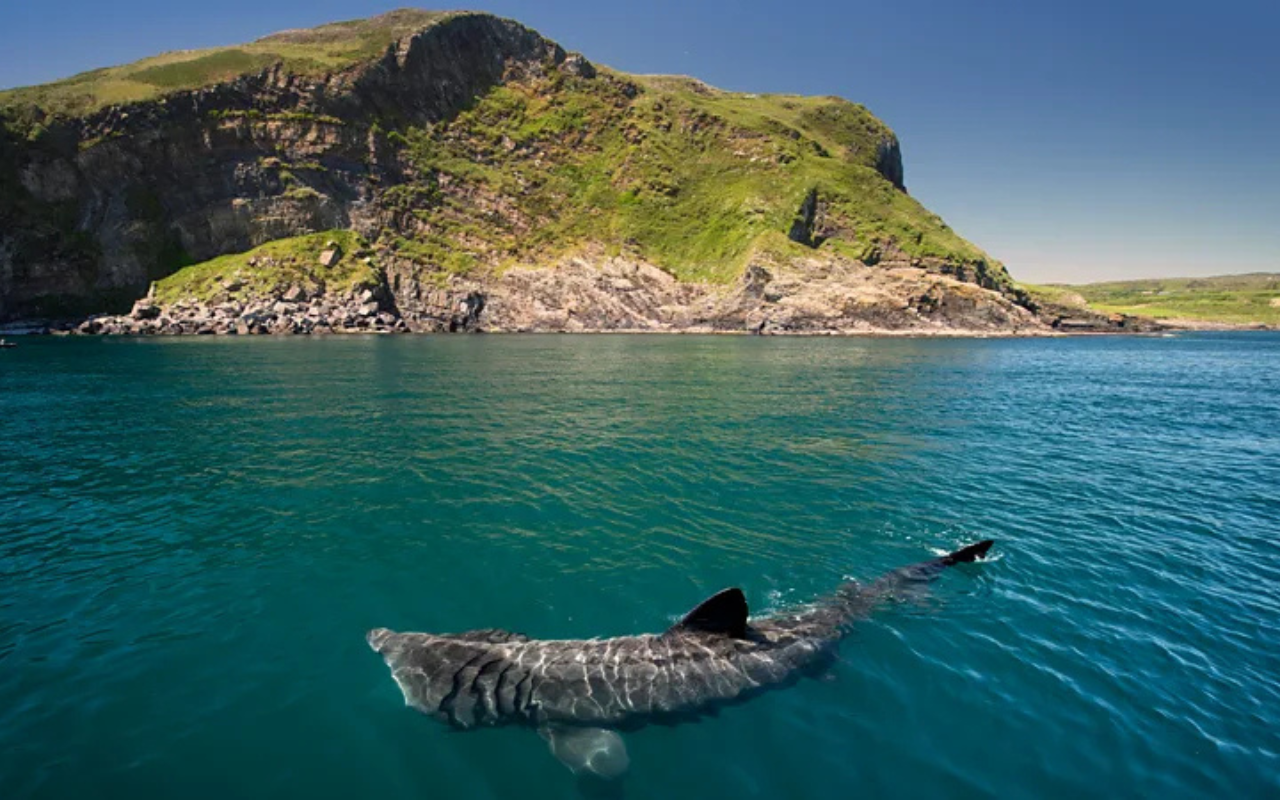
ToggleFor many people, the first sighting comes from the cliffs overlooking Keem Bay, where calm, clear conditions can reveal the broad silhouettes of sharks moving slowly beneath the surface. From these elevated viewpoints, the scale of the animals becomes immediately apparent as they glide through the sheltered bay.
Photo Credit:Getty Images
A Close Encounter With a Gentle Giant
While spotting basking sharks from land is memorable, boat excursions offer an even more remarkable experience. As vessels carefully approach under responsible wildlife-watching guidelines, passengers can observe the sharks feeding near the surface, sometimes only a short distance away.
Despite their enormous size, basking sharks pose no threat to humans. They feed by filtering tiny plankton from the water rather than hunting large prey, making them one of the ocean’s gentlest giants. Their slow, deliberate movements often surprise first-time observers who expect sharks to behave like fast-moving predators.
One of the World’s Largest Fish
The basking shark is the second-largest fish species alive today, surpassed only by the whale shark. Adults commonly reach around eight metres (26 feet) in length, while exceptional individuals can exceed 10 metres.
Their enormous mouths, which can open nearly a metre wide, are specially adapted to filter vast quantities of seawater in search of plankton. During feeding, they often swim slowly near the surface with their mouths wide open, creating one of the most distinctive wildlife spectacles in the North Atlantic.
Why Achill Island Becomes a Seasonal Hotspot
The waters surrounding Achill Island provide favourable feeding conditions during the warmer months as plankton becomes abundant. This seasonal food supply attracts basking sharks to bays and coastal waters, where they can sometimes be seen from beaches, cliff paths and boats.
Keem Bay, known for its dramatic scenery, has a long historical connection with the species. The sheltered bay was once home to a basking shark fishery, though today the area is recognised for wildlife tourism and conservation rather than commercial harvesting.
Conservation Remains Important
Although basking sharks can still be seen in Irish waters each year, the species has experienced significant population declines globally because of historic overfishing. Their slow growth and low reproductive rate make recovery particularly challenging, leading to increased conservation efforts in many parts of their range.
Researchers continue to study their seasonal movements and migration patterns to better understand how these animals use coastal habitats and how marine protection measures can support their long-term survival.
A Wildlife Experience Unlike Any Other
For visitors to Ireland’s Atlantic coast, seeing a basking shark has become one of the country’s most sought-after wildlife experiences. The combination of towering sea cliffs, clear coastal waters and the appearance of these peaceful giants creates a rare opportunity to observe one of the ocean’s most impressive creatures in the wild.
As the seasonal migration continues each year, Achill Island remains one of Europe’s premier destinations for those hoping to witness an unforgettable encounter with a species that has fascinated marine scientists and nature lovers for generations.