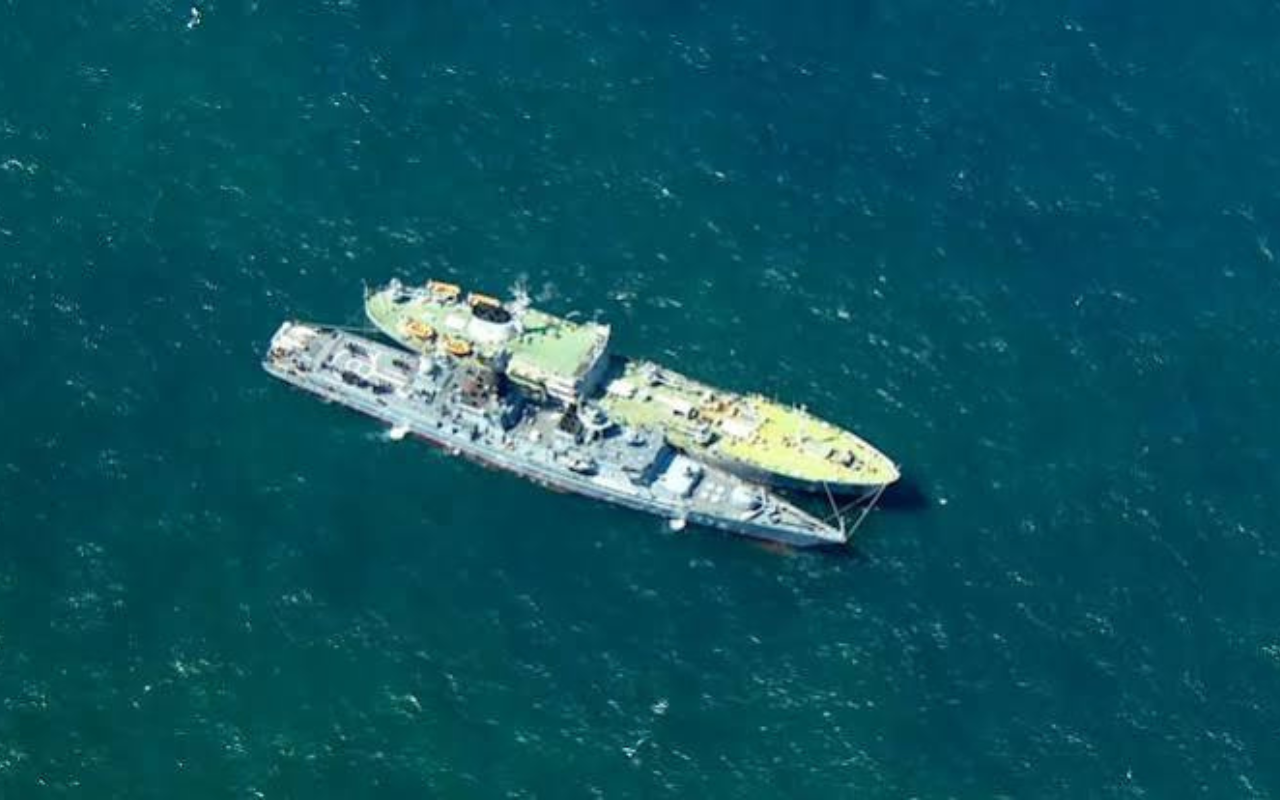
A Russian Navy frigate carried out a live-fire artillery exercise in the English Channel while being shadowed by the Royal Navy, in an incident that drew close attention from British and allied military forces.
Table of Contents
ToggleThe guided-missile frigate Neustrashimy conducted the drill in international waters roughly 40 to 45 nautical miles south of Plymouth after notifying British patrol vessel HMS Tyne of its intentions. Before the exercise began, the Russian crew requested that the Royal Navy ship move to a safer position, allowing the firing activity to proceed under established maritime safety procedures.
Exercise Lasted Around Half an Hour
According to reports, the gunnery exercise lasted approximately 30 minutes. A French military aircraft also monitored the Russian vessel during the operation and contacted it by radio to seek clarification about its planned activities.
Although the drill took place in international waters and complied with maritime notification requirements, military analysts described the location as unusual because of its proximity to one of the world’s busiest shipping routes and the UK’s southern coastline.
Royal Navy Maintained Close Surveillance
The UK’s Ministry of Defence said the Royal Navy continued to monitor the Russian vessel throughout its passage, reflecting Britain’s ongoing policy of tracking Russian naval movements near its waters.
British naval ships have frequently shadowed Russian warships transiting the English Channel and surrounding seas, particularly since Russia’s invasion of Ukraine heightened security concerns across Europe. The Royal Navy says such operations are intended to safeguard national security while maintaining awareness of military activity near the UK.
Part of a Broader Pattern
The latest incident follows several recent encounters involving Russian naval vessels operating close to British waters. In recent months, the Royal Navy has repeatedly monitored Russian frigates, intelligence-gathering ships and support vessels passing through the Channel and North Sea.
The increased activity has kept British and NATO forces on heightened alert as they continue to observe military movements across European waters. While live-fire drills in international waters are permitted under international maritime law when appropriate safety notices are issued, conducting such exercises close to another country’s coastline remains relatively uncommon.
What Happens Next
The Neustrashimy is expected to continue its voyage after completing the exercise, while British defence authorities are likely to maintain surveillance until the vessel leaves areas of strategic interest.
The episode highlights the continued military tensions between Russia and Western nations and underscores the importance of routine monitoring operations in the English Channel, one of the world’s busiest maritime corridors.