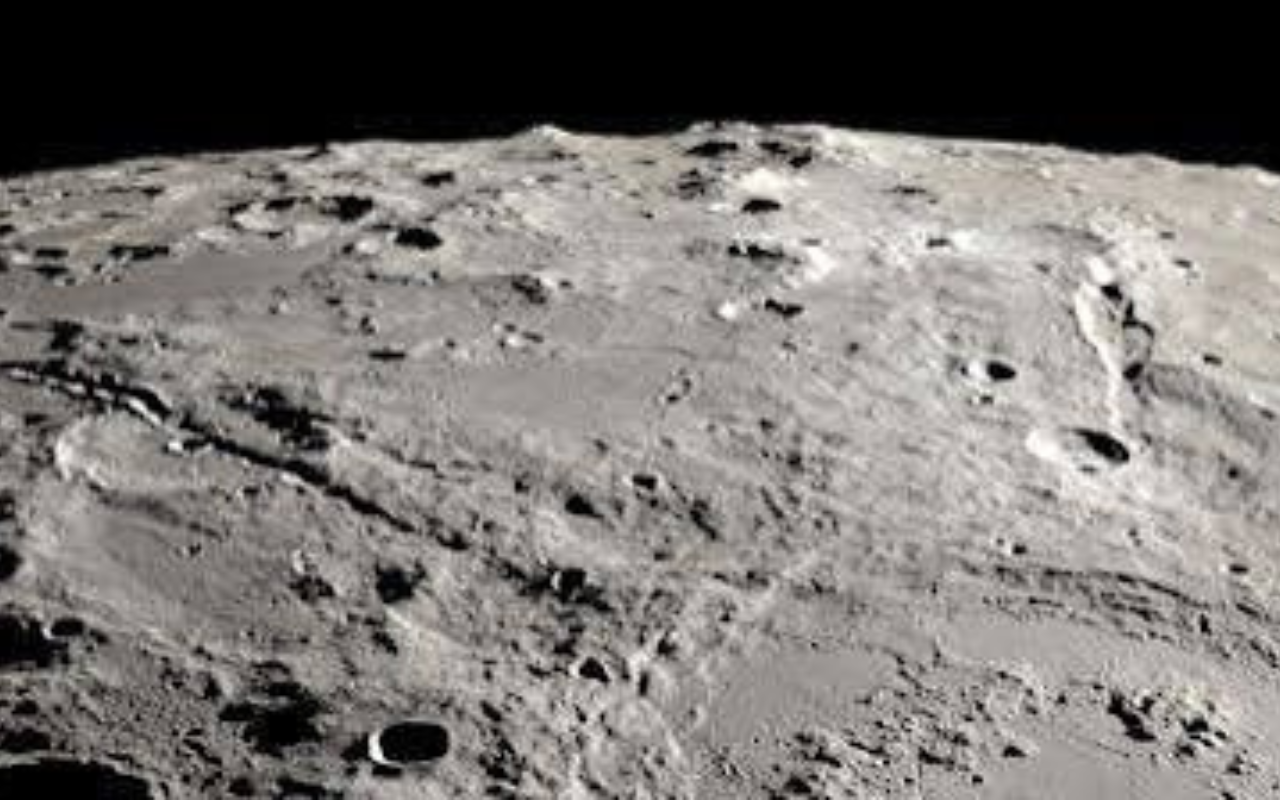
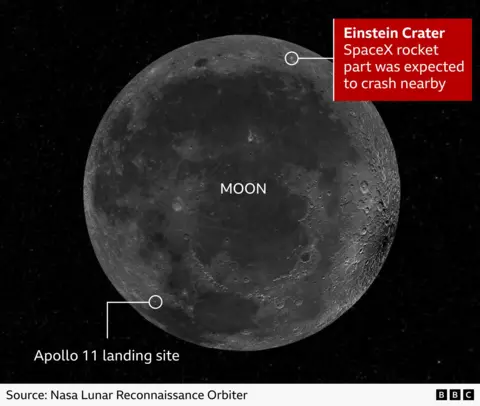
A discarded SpaceX rocket stage has collided with the Moon, turning an unplanned event into a rare scientific experiment. Researchers believe the Falcon 9 upper stage struck the lunar surface near the Einstein crater at roughly 5,400mph (8,700km/h), creating a fresh impact crater and throwing lunar material high above the surface.
Although the collision was not designed as part of a scientific mission, experts say it provides an unusual opportunity to observe how the Moon responds to a high-speed impact from a known object. Unlike natural meteoroids, whose size and speed are often uncertain, the rocket’s mass, trajectory and velocity were well understood before impact, allowing scientists to compare predictions with real observations.
A Rare Chance to Study Lunar Impacts
The Moon is constantly struck by meteoroids because it lacks an atmosphere to burn incoming objects before they reach the surface. Human-made impacts are far less common, making this event especially valuable for researchers.
Scientists expect the collision to have excavated a crater roughly 60 feet (about 18 metres) wide while sending dust and rocky debris into space. By studying the resulting ejecta plume, researchers hope to better understand how energy is transferred during impacts and how lunar soil behaves under extreme conditions.
Because the rocket’s characteristics were known in advance, the impact also serves as a real-world test for computer models used to interpret natural impacts across the Moon and elsewhere in the solar system.
Unlocking Clues About the Moon’s Surface
The cloud of material blasted from beneath the lunar surface could reveal important details about the Moon’s composition.
Scientists are particularly interested in analysing minerals and chemical elements exposed by the impact. Such information can improve understanding of how different regions of the Moon formed and evolved over billions of years. It may also help identify resources that could support future lunar exploration.
Supporting Future Lunar Missions
The findings could have practical benefits beyond planetary science.
NASA and other space agencies are preparing for an era of increased lunar activity through missions such as Artemis, with astronauts, robotic landers and scientific equipment expected to operate on and around the Moon in the coming years.
Studying how debris spreads after a high-speed impact can help engineers better assess potential risks to spacecraft, habitats and astronauts working on the lunar surface or in orbit. The event also provides valuable data for improving models that predict hazards from future impacts.
Observations Continue
The impact itself was difficult to observe directly because of its location near the Moon’s visible edge and challenging lighting conditions. While no clear images of the collision have yet been released, observatories detected evidence consistent with the event, including a debris plume containing sodium and lithium.
NASA’s Lunar Reconnaissance Orbiter and South Korea’s Korea Pathfinder Lunar Orbiter, equipped with the ShadowCam instrument, are expected to photograph the impact site when orbital and lighting conditions allow. Those images should help confirm the crater’s size and provide additional insight into the aftermath of the collision.
Growing Focus on Space Debris
The incident has also highlighted a broader challenge facing space exploration. As more missions travel beyond Earth orbit, experts say tracking and responsibly disposing of spacecraft and rocket stages will become increasingly important.
While controlled impacts can be an accepted end-of-mission strategy in some circumstances, the unexpected journey of this Falcon 9 upper stage illustrates the need for improved monitoring of objects operating in cislunar space. Researchers believe lessons learned from this event will contribute to safer and more sustainable exploration as activity around the Moon continues to expand.
The collision may have been accidental, but for scientists it represents an unusually well-documented impact experiment. As fresh observations and orbital images become available, researchers expect the event to improve understanding of lunar geology, refine impact science and support planning for the next generation of missions to the Moon.