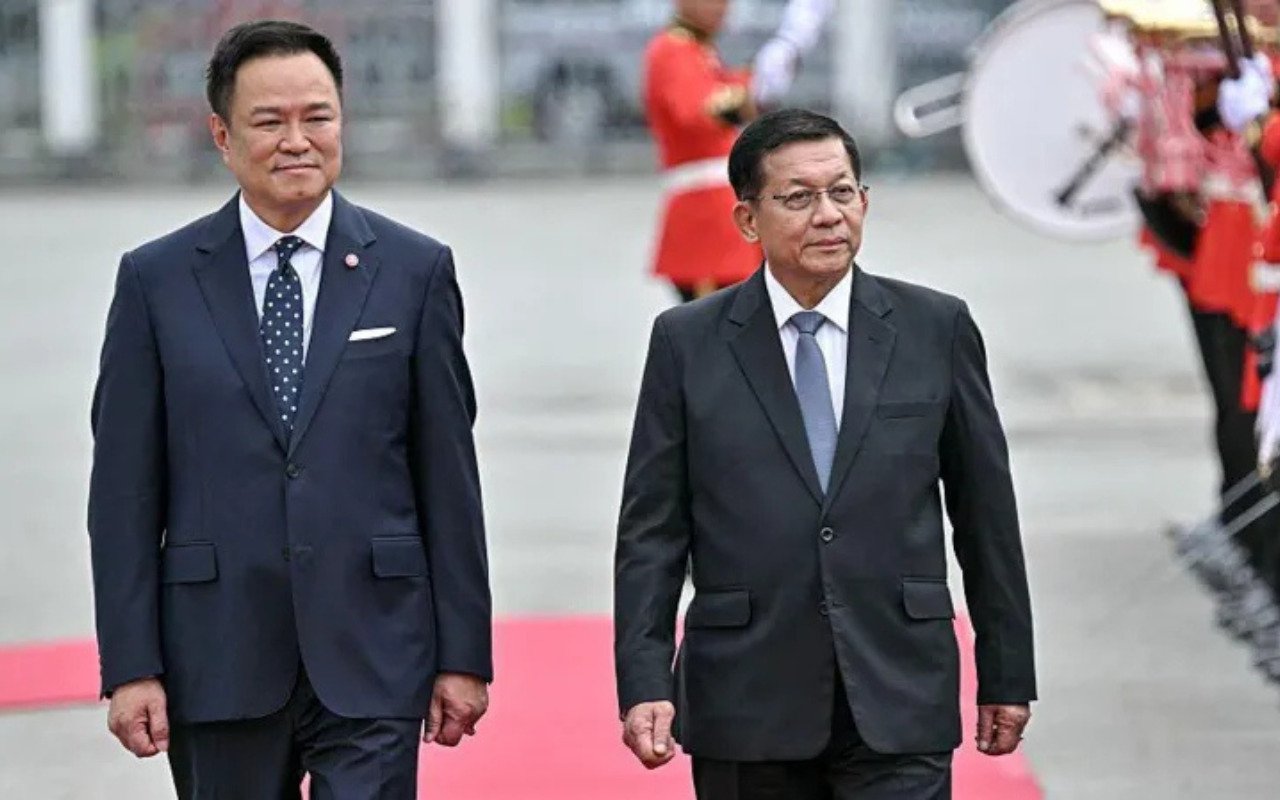
Myanmar President Min Aung Hlaing arrived in Thailand on Thursday for a two-day official visit, marking his first trip to the country since assuming the presidency earlier this year. The visit represents an important diplomatic step for Myanmar’s military-backed government as it seeks to strengthen regional ties after years of international isolation.
Min Aung Hlaing was welcomed with official honors before scheduled talks with Thai Prime Minister Anutin Charnvirakul. The two leaders are expected to discuss a range of issues affecting both countries, including border security, trade, transnational crime, and broader regional cooperation. Officials have also planned meetings aimed at encouraging closer economic ties between businesses in Thailand and Myanmar.
A Visit Shaped by Years of Political Turmoil
The visit comes more than five years after Myanmar’s military seized power in a 2021 coup that removed the elected government led by Aung San Suu Kyi. The takeover triggered nationwide resistance, escalating into a prolonged civil conflict that has claimed thousands of lives, displaced millions, and severely damaged the country’s economy.
Before becoming president in April 2026, Min Aung Hlaing served as Myanmar’s military ruler and faced extensive international sanctions. Western governments have largely avoided official engagement with his administration, while human rights organizations have continued to accuse the military of widespread abuses during the conflict.
Thailand Pushes Regional Engagement
Thailand has argued that maintaining dialogue with Myanmar is necessary for regional stability. Sharing a long land border with Myanmar, Thailand has been directly affected by cross-border fighting, refugee movements, and disruptions to trade.
Thai officials have described their approach as a “calibrated re-engagement,” saying closer communication could help advance ASEAN’s long-stalled efforts to reduce violence and encourage political dialogue inside Myanmar.
Still, the policy has drawn criticism from rights groups, which argue that high-level meetings risk lending political legitimacy to Myanmar’s military-backed leadership without meaningful progress on human rights or democratic reforms.
Regional Significance
The visit is being closely watched across Southeast Asia because it highlights differing approaches toward Myanmar’s political crisis. While many Western nations continue to impose sanctions and limit engagement, some neighboring countries have favored continued diplomatic contact in the hope of encouraging dialogue and reducing instability.
For Thailand, cooperation with Myanmar also carries practical importance, particularly on border management, security, migration, and economic activity between the two countries.
What Comes Next
The outcome of the visit will likely be measured less by ceremonial meetings than by whether it produces tangible progress on bilateral cooperation and regional diplomacy. ASEAN’s peace initiative has made limited headway since Myanmar’s 2021 coup, and many observers remain cautious about the prospects for meaningful political dialogue.
Even so, the visit signals Myanmar’s continued effort to rebuild diplomatic relationships within the region while Thailand positions itself as a key interlocutor in addressing one of Southeast Asia’s most complex and enduring political crises.