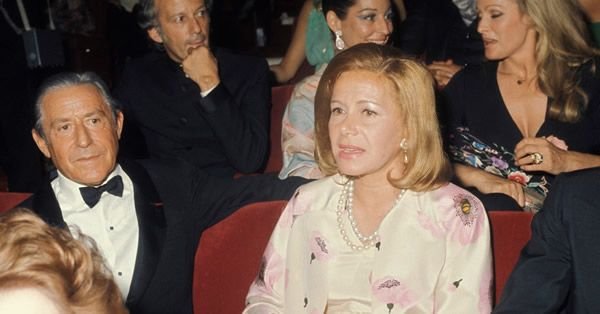
Tina Onassis Niarchos was born as Athina Mary Livanos on 19 March 1929 in Kensington, London, into one of the wealthiest and most respected Greek shipping families of the twentieth century. Her father, Stavros G. Livanos, was a powerful shipping magnate whose name carried immense influence across Europe and beyond. From an early age, Tina was surrounded by elegance, privilege, and the expectations that came with belonging to such a prominent dynasty.
Her mother, Arietta Zafirakis, ensured that Tina and her siblings were raised with a strong sense of refinement, discipline, and social awareness. Tina grew up alongside her sister Eugenia and brother George, and the family maintained strong ties to both London and Greece. Their upbringing was deeply connected to high society, where appearances, reputation, and family alliances were often as important as business itself.
As a young woman, Tina quickly became known for her beauty, grace, and sophisticated presence. She was admired not only for her striking appearance but also for the quiet elegance she carried in elite social circles. Her youth unfolded during a period when Europe was changing rapidly, yet the world of powerful shipping families remained intensely traditional, and Tina’s future was already closely linked to influential marriage and family legacy.
Marriage to Aristotle Onassis and a Life of Luxury
At just seventeen years old, Tina married Aristotle Onassis in 1946, beginning one of the most famous unions in the history of international high society. Aristotle was already an ambitious businessman with a vision to dominate global shipping. Their marriage was not only romantic in public perception but also represented a significant alliance between two powerful Greek shipping dynasties.
Life with Aristotle brought Tina into an even brighter international spotlight. Their world was filled with luxury yachts, grand residences, private islands, glamorous parties, and friendships with celebrities, politicians, and aristocrats. Tina became a symbol of elegance and prestige, often photographed in exclusive gatherings that defined the golden age of elite European society.
Despite the glamour, their marriage was far from peaceful. Aristotle’s intense business life and his increasingly public relationship with opera star Maria Callas placed enormous strain on the relationship. Tina endured emotional difficulties beneath the polished public image, and eventually the marriage ended in divorce in 1960, marking a painful turning point in her personal life.
Motherhood and Family Responsibilities
Tina and Aristotle had two children, Alexander Onassis and Christina Onassis, both of whom would later become well-known figures in the Onassis family legacy. Motherhood became one of the most important parts of Tina’s life, and she remained deeply connected to her children even as her marriage faced serious difficulties.
Alexander was often seen as the future of the Onassis empire, while Christina carried the immense expectations of being an heiress to one of the world’s greatest fortunes. Tina tried to provide stability and warmth for her children despite the emotional turbulence surrounding the family. Living within enormous wealth did not protect them from personal challenges, and family tensions often shaped their daily lives.
As the children grew older, Tina’s role as a mother became increasingly complex. Public attention followed every family event, and private struggles often became newspaper headlines. Her protective instincts were especially strong toward Christina, whose later life would also be marked by emotional difficulty and public fascination. Tina understood better than most that wealth did not guarantee peace or happiness.
Life After Divorce and Personal Reinvention
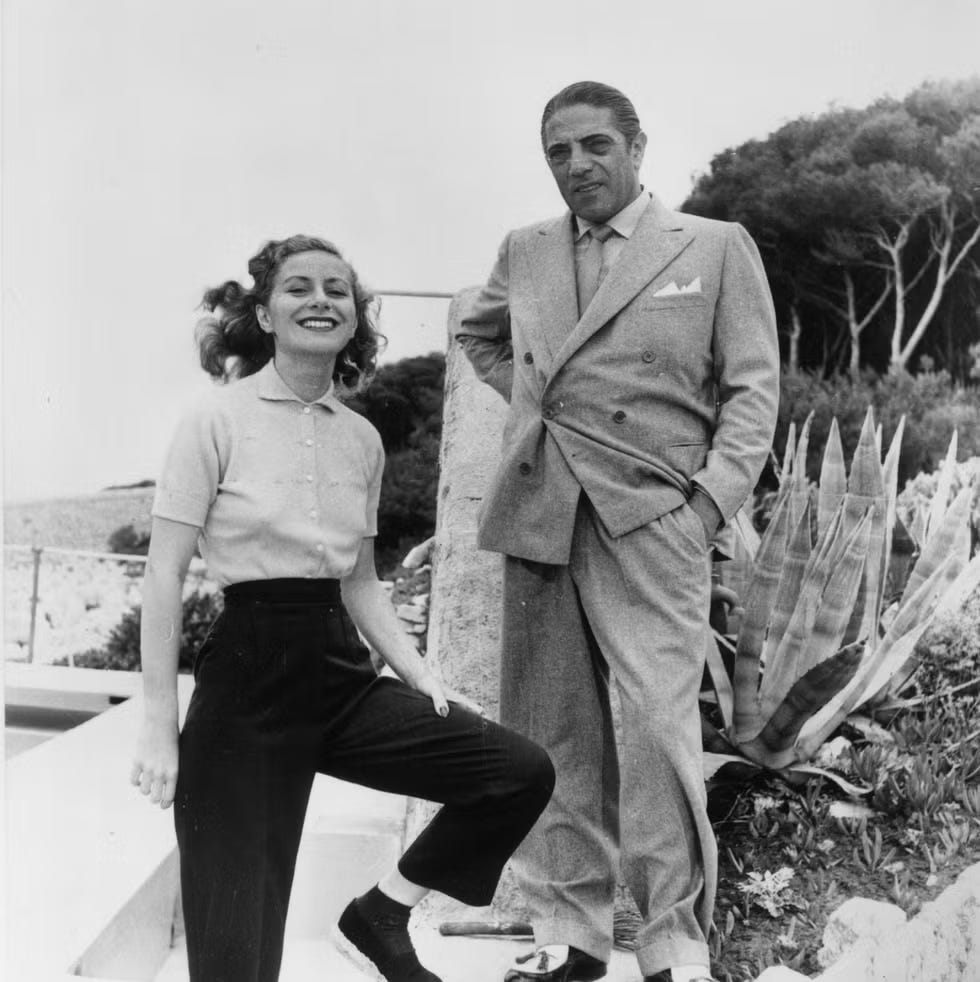
After her separation from Aristotle Onassis, Tina faced the challenge of rebuilding her identity outside the shadow of one of the world’s most famous men. She returned to using her maiden name, Livanos, and gradually sought a life that allowed greater personal independence. This was not easy, as society still viewed her largely through the lens of her marriage.
She later married John Spencer-Churchill, the Marquess of Blandford, bringing her into British aristocratic circles. This marriage linked Tina to one of Britain’s most historic noble families and introduced a different kind of prestige compared to the world of shipping magnates. Her presence in aristocratic society reflected her ability to adapt and maintain influence across different elite worlds.
Although elegant and socially significant, this second marriage did not last. It ended in divorce in 1971, but it showed Tina’s continued effort to define her own path. She was no longer simply the former wife of Aristotle Onassis; she was a woman navigating identity, family, and public expectation in a world where private choices were constantly judged.
Marriage to Stavros Niarchos and Public Controversy
Perhaps the most dramatic chapter of Tina’s life began when she married Stavros Niarchos in 1971. This marriage attracted enormous media attention because Niarchos had long been Aristotle Onassis’s greatest business rival. Even more controversially, he had previously been married to Tina’s sister, Eugenia, making the relationship deeply personal as well as socially explosive.
The marriage shocked many people in elite European society. It revived old rivalries between the Onassis and Niarchos empires and created intense speculation about family tensions behind closed doors. For observers, the relationship symbolised how business competition and private relationships were tightly connected among powerful shipping dynasties.
Tina once again found herself at the centre of headlines and public fascination. Her marriage to Niarchos was seen by some as bold and by others as deeply controversial. Regardless of opinion, it reinforced her place as one of the most talked-about women of her era, whose personal life seemed inseparable from the drama of wealth and power.
Personal Tragedy and the Loss of Alexander
Despite the wealth and glamour surrounding the family, Tina’s life was deeply marked by personal tragedy. In 1973, her son Alexander died following injuries from an airplane crash in Athens. He was only twenty-four years old, and his death devastated the entire Onassis family. For Tina, this loss was emotionally overwhelming and changed the final years of her life forever.
Alexander had been widely viewed as the future of the family’s business empire. His sudden death left a painful emptiness and had a profound effect on his father Aristotle as well. For Tina, the grief was especially intense because her relationship with her children had always been central to her emotional world. No amount of fortune could soften such a devastating loss.
The tragedy also shifted the family’s future. Christina now carried even greater responsibility as the surviving heir, and the emotional burden became enormous. Tina struggled deeply with this period, and many historians believe that the sorrow following Alexander’s death contributed significantly to the decline in her own health and wellbeing.
Death and Questions Around Her Final Years
Only one year after Alexander’s death, Tina herself died in Paris in 1974 at the age of forty-five. Her death shocked those who had followed her life and immediately became the subject of widespread attention. Officially, the cause was recorded as acute pulmonary oedema, though many reports also linked her passing to a suspected overdose.
Her death brought sadness but also legal and emotional complications. Questions surrounding inheritance, estate control, and family rights quickly followed. Because Tina was connected to multiple powerful dynasties, her passing had consequences far beyond personal grief and entered the territory of financial disputes and public legal interest.
The mystery and sadness surrounding her final years have remained part of her lasting story. Many people still view Tina as a tragic figure whose life reflected both extraordinary privilege and deep emotional pain. Her early death added another layer to the legend that continues to surround the Onassis and Niarchos families.
Inheritance, Estate and Family Legal Battles
After Tina’s death, major legal disputes emerged involving her estate, which was estimated to be worth hundreds of millions of dollars. Her daughter Christina became involved in a highly publicised disagreement with Stavros Niarchos regarding inheritance rights and the handling of Tina’s personal wealth. This legal battle attracted international media attention.
The issue was not only about money but also about trust, family loyalty, and legacy. Christina believed that her mother’s estate should be fully protected for her children and that certain assets required legal clarification. The dispute reflected the complicated relationships within elite dynasties, where emotional wounds often mixed with financial interests.
Eventually, the legal action was withdrawn, and many personal possessions, jewellery, artwork, and financial assets were returned to Christina. Still, the case became one of the defining posthumous chapters of Tina’s life. It showed how even after death, the influence of Tina Onassis Niarchos continued to shape family relationships and public attention.
Why Tina Onassis Niarchos Still Fascinates the World
Tina Onassis Niarchos remains a captivating figure because her life represents a rare combination of beauty, wealth, power, and heartbreak. She moved among the most influential names of the twentieth century and lived through relationships that seemed almost cinematic in their glamour and complexity. Her story continues to attract readers because it feels both grand and deeply human.
She was connected to legends such as Aristotle Onassis, Maria Callas, and Stavros Niarchos, placing her at the centre of one of the most glamorous periods in European social history. Yet behind the luxurious yachts and exclusive parties was a woman dealing with betrayal, grief, family pressure, and personal reinvention.
For modern audiences, especially in the United Kingdom, Tina’s story reflects the contrast between public glamour and private struggle. She represents the hidden emotional cost of privilege and fame. That powerful contrast is why Tina Onassis Niarchos continues to be remembered not just as a socialite, but as one of the most compelling women of her generation.
You may also read: Television Success and Dramatic Roles