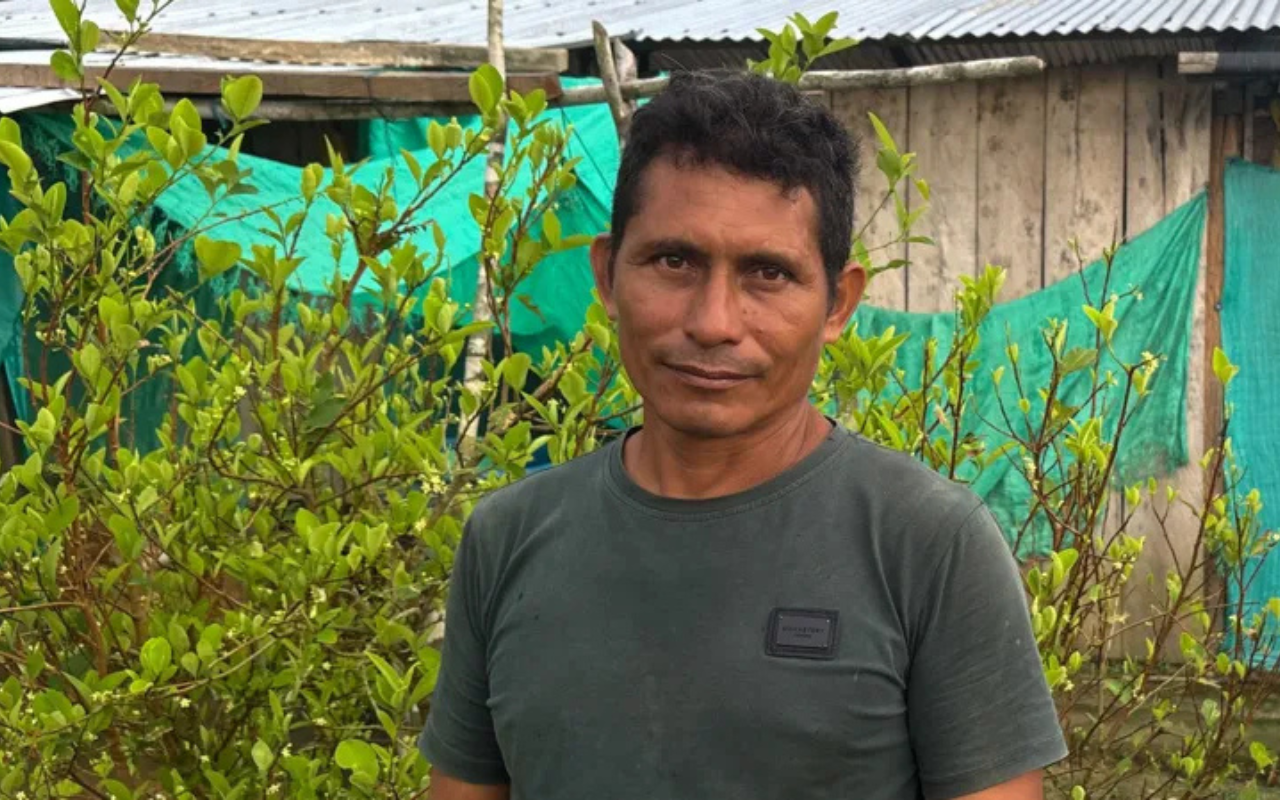
A Colombian farmer who once believed he had left coca cultivation behind has returned to growing the crop, underscoring the economic realities confronting many rural communities where legal farming remains difficult to sustain.
Table of Contents
TogglePerea, a farmer from the remote department of Meta, had previously uprooted his coca plants after joining a government program designed to help farmers transition to lawful agriculture. He replaced the crop with staples such as cassava and plantain, hoping to build a more stable and legal source of income for his family.
That plan, he says, never materialized as expected.
Photo Credit:Coca leaves, which can be processed into the drug cocaine
Promised Support Fell Short
According to Perea, financial assistance and other support promised through Colombia’s crop substitution initiative either failed to arrive or proved insufficient. At the same time, poor infrastructure and frequent flooding made it difficult to transport and sell legal produce from his isolated community.
Without reliable roads or consistent market access, growing food crops became financially unsustainable. Facing mounting economic pressure, Perea resumed cultivating coca in 2024 despite his earlier commitment to leave the industry. He says the decision was driven by the need to support his family rather than personal preference.
A Wider Challenge for Colombia
Perea’s experience illustrates one of the central obstacles facing Colombia’s long-running efforts to reduce coca cultivation. Government crop substitution programs aim to persuade farmers to replace coca—the primary raw material used to manufacture cocaine—with legal agricultural products.
Success depends on more than simply removing coca fields. Farmers also need dependable financial assistance, functioning transport networks, access to buyers, and long-term economic opportunities that can compete with the income generated by coca production. When those conditions are absent, many rural families struggle to maintain legal farming.
Why the Issue Matters
Colombia remains the world’s largest producer of coca leaf, and reducing cultivation has been a key objective for successive governments seeking to combat drug trafficking while improving conditions in rural areas.
The return of farmers like Perea to coca production highlights the complexity of addressing the problem. Eradicating coca without creating viable alternatives can leave communities facing severe financial hardship, particularly in remote regions where infrastructure and public services remain limited.
What Comes Next
The effectiveness of Colombia’s crop substitution strategy will continue to depend on whether authorities can provide sustained investment in rural development alongside efforts to reduce illicit cultivation. For many farming families, the decision between legal crops and coca is shaped less by ideology than by economic survival.
Perea’s story reflects that reality. While he once hoped legal farming would secure his family’s future, he says the lack of lasting support ultimately left him with few practical alternatives.