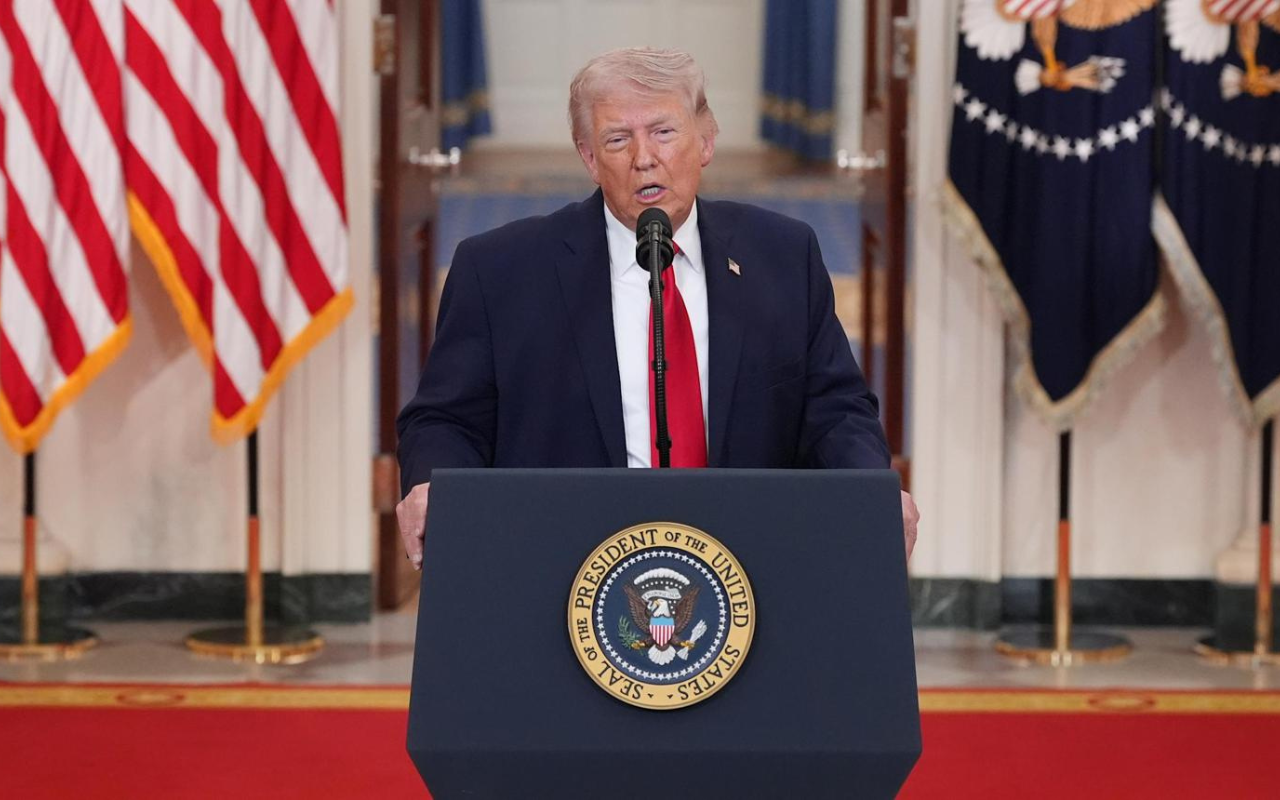
President Donald Trump has abandoned his proposal to impose a 20% fee on commercial vessels transiting the Strait of Hormuz, just one day after unveiling the idea as part of a broader U.S. strategy to secure one of the world’s most important maritime routes. Instead, the administration now says it will pursue trade and investment agreements with Gulf partners while continuing efforts to protect shipping in the region.
Table of Contents
ToggleThe abrupt change reflects the difficult balance the White House faces as it seeks to maintain pressure on Iran without creating additional friction with allies that rely heavily on the strategic waterway for energy exports and international trade.
A Strategic Waterway at the Center of the Conflict
The Strait of Hormuz remains a focal point of the conflict between the United States and Iran. Roughly one-fifth of the world’s oil supply normally passes through the narrow shipping lane, making any disruption a concern for global energy markets and international commerce.
Trump’s original proposal called for vessels using the passage—including those from allied nations—to pay a fee intended to offset the costs of U.S. naval operations protecting maritime traffic. The idea quickly raised legal and diplomatic questions, with critics arguing that imposing unilateral tolls on an international waterway would be difficult to justify under existing maritime rules.
Shift Toward Economic Partnerships
By Tuesday, Trump had publicly dropped the toll proposal, saying the United States would instead deepen trade and investment relationships with Gulf states. The administration presented the revised approach as a way to strengthen regional cooperation while continuing security operations in and around the Strait of Hormuz.
The change came after discussions with regional leaders, according to the president, and avoids placing direct financial costs on allies that depend on uninterrupted access to the shipping route. Several Gulf countries have already pledged substantial long-term investment commitments in the United States, making economic cooperation a more familiar framework than a transit fee.
Conflict Continues Despite Earlier Diplomatic Efforts
The policy reversal arrives against the backdrop of a conflict that has stretched on for months. Although the United States and Iran previously agreed to a memorandum outlining a temporary ceasefire and a path toward negotiations, repeated military exchanges have prevented a lasting settlement.
Recent fighting has included renewed U.S. military operations, a naval blockade targeting Iranian shipping, and Iranian threats to regional energy exports. Those developments have kept tensions elevated and complicated diplomatic efforts to reach a broader agreement.
Markets and Regional Stability Remain in Focus
Financial markets closely tracked the latest developments. Oil prices, which had climbed amid concerns over potential shipping disruptions, eased after Trump withdrew the toll proposal, suggesting investors viewed the revised policy as reducing the immediate risk of additional trade restrictions in the region.
Even so, uncertainty remains high. Analysts continue to warn that restoring normal commercial traffic through the Strait of Hormuz will require more than military patrols, as shipping companies remain cautious while the broader conflict continues.
What Comes Next
The administration’s latest shift highlights the challenge of pursuing both military pressure and diplomatic engagement at the same time. While the United States continues to enforce measures against Iran, it is also seeking stronger economic ties with regional partners as part of its broader strategy.
Whether the new approach helps create momentum toward negotiations remains uncertain. For now, the Strait of Hormuz remains a critical flashpoint, and developments there will continue to shape regional security, global energy markets, and the prospects for ending the conflict.