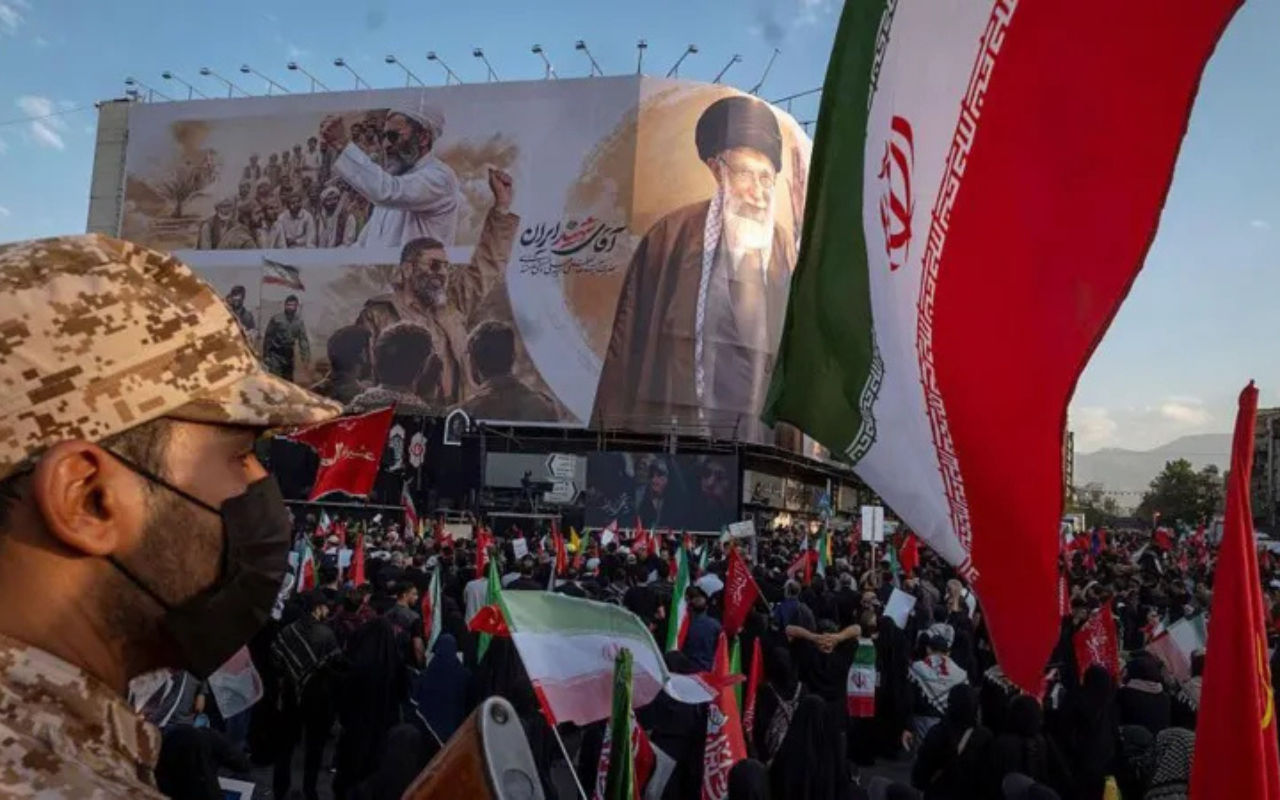
Tensions between the United States and Iran escalated further on Wednesday after Tehran warned it could widen restrictions on major energy export routes in response to a new series of American military strikes.
Table of Contents
ToggleIran’s Revolutionary Guards said the Strait of Hormuz would remain closed until what they described as US “acts of aggression” come to an end. The force also warned that other important oil and gas export corridors in the region could face disruption if military operations continue. Photo Credit:Getty Images
Fresh US Operation Targets Iranian Military Sites
The latest warning followed another large-scale US military operation carried out by US Central Command (CENTCOM). According to the US military, American forces used drones, aircraft and naval assets to strike several Iranian military positions after conducting another lengthy operation overnight.
CENTCOM said the attacks were intended to reduce Iran’s ability to threaten commercial shipping in the Strait of Hormuz. Military officials stated that the latest mission focused on coastal defence systems along with cruise missile storage and launch facilities, including positions on Greater Tunb Island.
The operation marked another stage in an expanding military campaign aimed at protecting commercial navigation through one of the world’s most strategically important waterways.
Strait of Hormuz Remains at the Centre of the Crisis
The Strait of Hormuz remains a critical passage for international energy markets, serving as one of the world’s busiest routes for oil and liquefied natural gas exports.
With commercial tanker traffic already heavily disrupted, concerns have grown over supply shortages and rising transportation costs. Shipping companies have faced increased risks while navigating the area as military activity has intensified in recent days.
The renewed confrontation has also pushed global oil prices higher as traders weigh the possibility of prolonged disruptions to energy supplies moving through the Gulf.
Regional Security Risks Continue to Grow
Iran’s latest warning suggests the confrontation could extend beyond the Strait of Hormuz if diplomatic efforts fail to ease tensions. Officials indicated that additional regional export routes could become targets, increasing uncertainty for global shipping and energy markets.
The United States has maintained that its operations are designed to protect international commercial shipping and reduce threats posed by Iranian military capabilities. At the same time, the exchange of military actions has heightened concerns that the conflict could draw in additional regional actors if hostilities continue.
Why the Latest Escalation Matters
The confrontation carries consequences well beyond the Middle East. Any prolonged disruption to Gulf shipping routes could affect global energy prices, freight costs and supply chains, particularly for countries that rely heavily on oil and gas transported through the region.
Diplomatic efforts to reduce tensions continue, but the latest exchange of military action and retaliatory threats underscores how quickly the situation can affect international trade and energy security. With both sides maintaining firm positions, markets and governments are closely monitoring developments for signs of either further escalation or renewed negotiations.