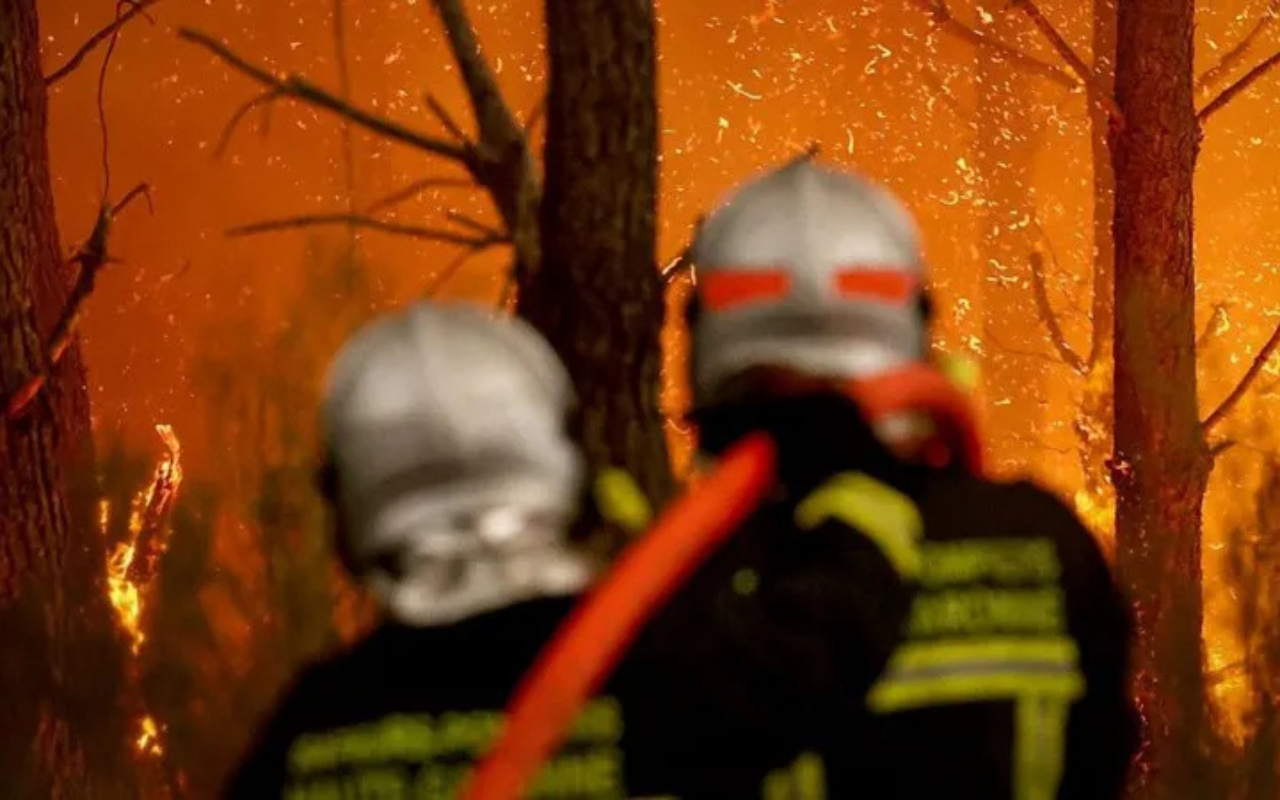
Wildfires have once again swept across large areas of southern Europe, forcing mass evacuations and placing enormous pressure on emergency services. France, Spain and Portugal have all faced destructive blazes this summer, with firefighters working around the clock to protect communities, forests and critical infrastructure. Recent fires in France’s Gironde region have been among the country’s most severe, resulting in fatalities among firefighting crews and injuries to many others.
Table of Contents
ToggleThe dramatic images of firefighters battling flames from the ground while aircraft drop water from above have prompted a growing question: if modern technology has transformed so many industries, why does wildfire response still depend so heavily on people and conventional aircraft?
The answer is changing. Experts say technology is becoming an increasingly important partner in wildfire management, although it is unlikely to replace frontline firefighters any time soon.
Detecting Fires Before They Spread
One of the biggest advances has come in early detection.
Researchers and technology companies are developing systems that combine artificial intelligence, drones and networks of environmental sensors to identify small fires before they become uncontrollable. AI-powered software can analyse weather conditions, vegetation, temperature and wind patterns to identify areas at high risk, while drones equipped with thermal cameras can spot hotspots that may be invisible to the human eye.
Projects such as Predifire and SenForFire are designed to shorten response times by providing emergency services with real-time information about developing fires and changing conditions.
Early intervention is widely regarded as one of the most effective ways to reduce the scale and cost of wildfires.
Drones Expand Firefighters’ View
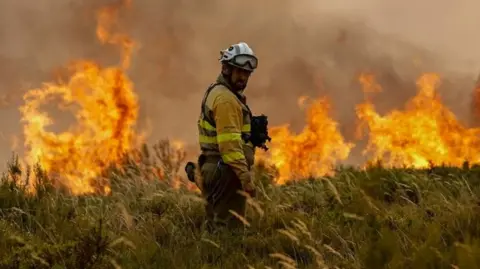
Photo Credit:Getty Images
Although drones are already widely used in military operations, their role in wildfire response is more specialised.
Rather than replacing aircraft that drop thousands of litres of water, drones are typically deployed to map fire boundaries, monitor the movement of flames, identify dangerous hotspots and provide live video to incident commanders.
Because they can safely fly over hazardous areas, drones reduce the need for personnel to enter dangerous terrain simply to assess conditions. Thermal imaging also allows emergency teams to locate fires that continue burning beneath vegetation long after visible flames have disappeared.
Some companies are also developing autonomous drones capable of carrying fire suppression materials or deploying specialised firefighting payloads, although many of these systems are still being tested rather than used on a large operational scale.
Satellites and AI Improve Situational Awareness
Satellite imagery has become another valuable tool for emergency agencies.
Combined with artificial intelligence, satellite data can help identify new ignition points, estimate how quickly fires may spread and direct firefighting resources to the areas facing the greatest risk.
These systems also provide a broader overview than ground crews can obtain, particularly during large-scale fires that stretch across hundreds of square kilometres.
Researchers believe that integrating satellite monitoring with weather forecasting and predictive modelling will continue to improve emergency planning as wildfire seasons become longer and more intense.
Why Humans Remain Essential
Despite rapid advances, technology cannot replace experienced firefighters.
Wildfires are unpredictable, influenced by changing winds, rugged terrain and rapidly shifting weather. Human judgement remains essential when making decisions about evacuations, rescue operations and protecting lives and property.
Aircraft capable of carrying large volumes of water also continue to play a critical role in suppressing major blazes, particularly where fires spread faster than ground crews can respond.
Instead, experts increasingly view technology as a force multiplier that improves safety, speeds up decision-making and gives emergency teams better information while leaving critical operational decisions to trained personnel.
Growing Challenge Demands Smarter Responses
Scientists and emergency officials have warned that rising temperatures and prolonged periods of drought are increasing wildfire risks across much of Europe. As fires become more frequent and severe, governments are investing not only in additional firefighting resources but also in technologies that strengthen prevention and early response.
The future of wildfire management is therefore unlikely to be a choice between firefighters and machines. Instead, the most effective response may come from combining experienced crews with increasingly sophisticated digital tools, allowing emergency services to detect fires sooner, understand them better and respond more effectively before they grow into large-scale disasters.