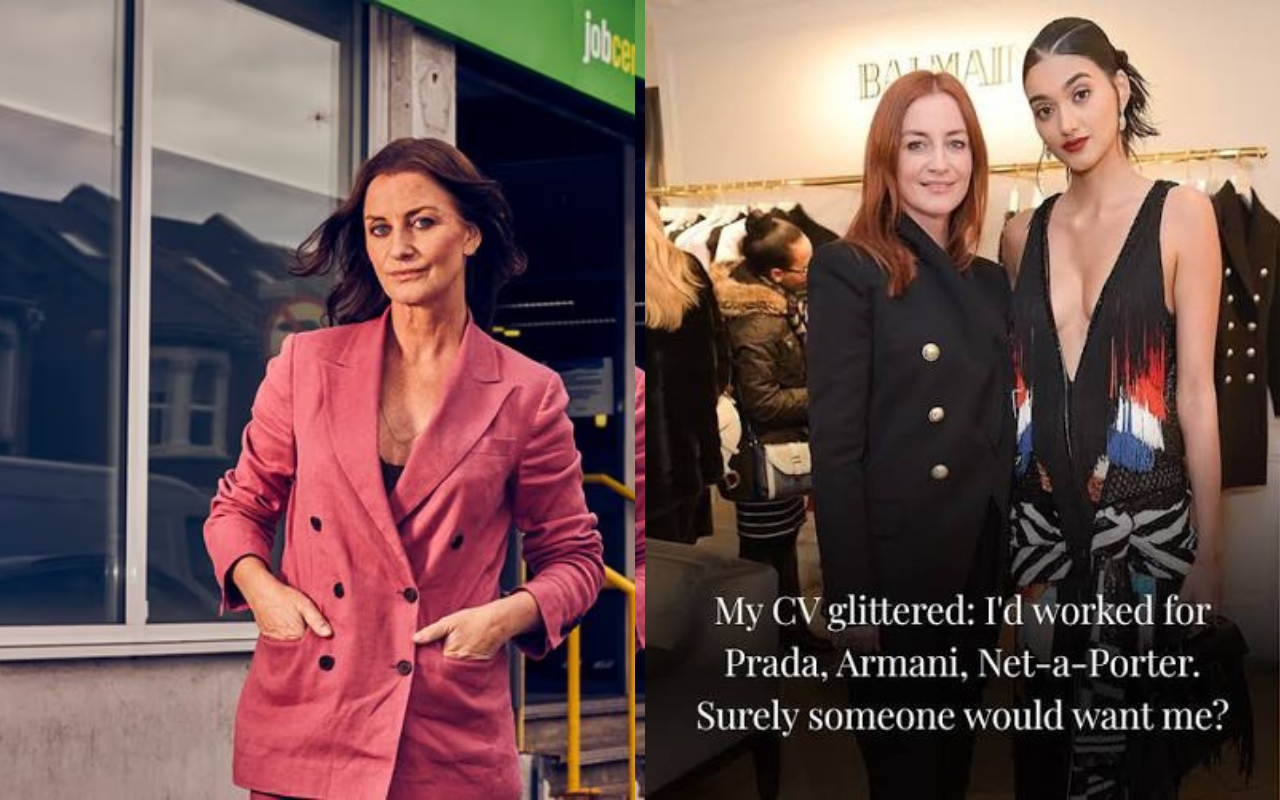
For decades, she worked at the heart of the fashion industry, advising readers on trends, style and luxury brands. But after a successful career spanning around 30 years, the sudden loss of her professional role brought an unexpected reality: unemployment, financial uncertainty and repeated rejection while trying to return to work.
Table of Contents
ToggleThe journalist, who previously served as a fashion editor, has shared her experience of rebuilding her life after her career came to an abrupt halt in her early 50s. Her account highlights the emotional and practical challenges many experienced professionals face when long-established careers come to an end.
A Career That Changed Overnight
Having spent years in senior editorial positions within the fashion industry, she had become accustomed to a fast-paced profession shaped by deadlines, travel and close relationships with leading designers and brands.
That stability disappeared when her role ended, forcing her to reassess both her finances and her future. She described submitting around 150 job applications without receiving a single response, a process that left her questioning how professionals with decades of experience fit into today’s employment market.
The prolonged search for work eventually led to financial hardship, including reliance on state benefits while attempting to secure another position.
A Wider Challenge Facing Midlife Workers
Although her story is deeply personal, it reflects concerns shared by many professionals over the age of 50. Older job seekers often report that finding new employment can become significantly more difficult despite extensive experience and established careers.
Recruitment practices, changing workplace expectations and rapid shifts in industries have all contributed to concerns about how experienced workers are valued during hiring processes. Women who have spent decades building careers may face additional challenges if they are returning to work after career breaks or transitioning into new sectors.
More Than a Financial Setback
The loss of employment affected far more than income. For many people whose careers form a major part of their identity, redundancy or prolonged unemployment can also have a profound emotional impact.
The transition from a high-profile industry role to an uncertain future required adapting to a very different daily routine while continuing to search for opportunities. The repeated lack of responses to applications added to the frustration and uncertainty.
Why the Story Resonates
Her experience has attracted attention because it speaks to broader questions about age, experience and opportunity in today’s labour market. As populations age and people remain in the workforce for longer, ensuring experienced professionals continue to have meaningful career opportunities is becoming an increasingly important issue for employers and policymakers alike.
Stories like hers also highlight the value of recognising transferable skills gained over long careers rather than focusing solely on recent industry experience or age.
What Comes Next
While her account focuses on the difficulties of rebuilding a career later in life, it also contributes to a wider conversation about employment practices, career transitions and support for experienced workers.
The challenges she describes are likely to resonate with many professionals who find themselves unexpectedly starting over after years of success, underscoring the need for greater attention to the barriers faced by older job seekers in an evolving job market.