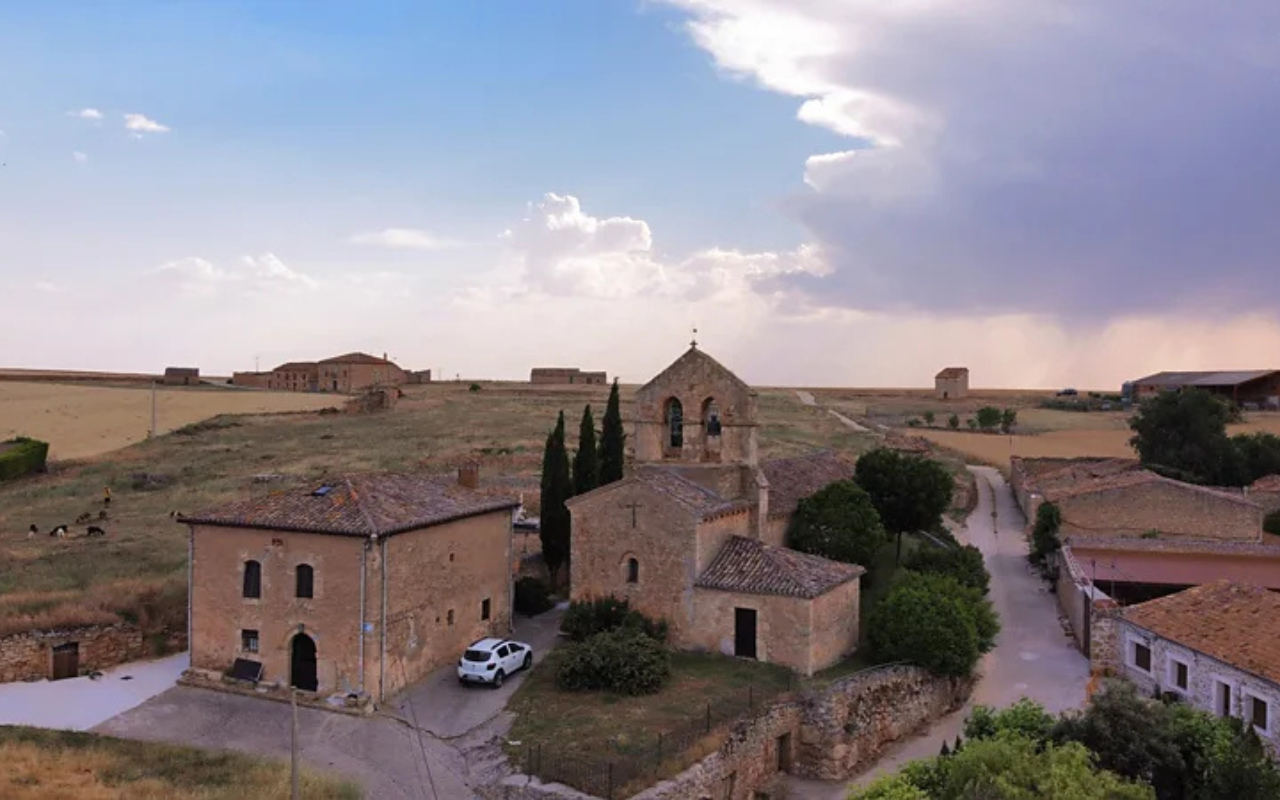
For most of the year, Avellanosa de Muñó is a place where little changes. The tiny farming village in Spain’s Burgos province is home to only a handful of permanent residents, with few services and almost no tourist activity. In just a matter of days, though, it is expected to draw the attention of astronomers, photographers and eclipse enthusiasts from around the world.
The reason is a rare combination of celestial events that will unfold on August 12, 2026, transforming this quiet corner of northern Spain into one of Europe’s most remarkable skywatching destinations.
A Rare Sequence in the Sky
Photo Credit:Rishika Sharma
The village lies directly within the path of totality for the upcoming total solar eclipse, allowing observers to see the Moon completely cover the Sun for a brief period before sunset. Spain has not experienced a total solar eclipse visible from mainland locations since 1912, making the event historically significant for the country.
Because the eclipse will occur close to sunset, residents and visitors are expected to experience an unusual visual effect. Daylight will fade dramatically as totality arrives, only for the Sun to briefly reappear before finally setting below the horizon minutes later. The sequence creates the impression of darkness arriving twice in the same evening.
Another Spectacle After Nightfall
The celestial display will not end with the eclipse.
Later that evening, the annual Perseid meteor shower is expected to peak, offering another opportunity for visitors to witness bright streaks crossing the night sky. The village’s rural setting, with minimal artificial lighting and open views across the surrounding countryside, provides favorable conditions for observing the meteor shower.
The rare timing of the eclipse and the Perseids on the same day has generated considerable interest among astronomy enthusiasts planning trips across northern Spain.
Why Avellanosa de Muñó Stands Out
Although several communities across the eclipse’s path will experience totality, Avellanosa de Muñó has attracted particular attention because of its geography.
Surrounded by rolling farmland and gentle hills, the village offers broad, unobstructed views toward the western horizon. The absence of heavy development and light pollution also makes it an attractive location for both eclipse viewing and nighttime astronomy.
Its quiet character adds another layer of appeal. Unlike larger tourist destinations, the village has remained largely untouched by commercial development, giving visitors the chance to experience the event in a peaceful rural landscape.
A Temporary Transformation
For local residents, the coming days represent an unusual change from everyday life.
The village normally sees little traffic beyond local farming activity and routine deliveries. During the eclipse, thousands of visitors are expected across the wider region as travelers seek clear skies and prime viewing locations. That temporary influx is likely to bring renewed attention to an area better known for its declining population than international tourism.
Looking Ahead
The August 12 eclipse is expected to be one of Europe’s most significant astronomical events in years, with northern Spain positioned among the best places to witness it. For Avellanosa de Muñó, a village that usually passes unnoticed, the alignment of a total solar eclipse and the Perseid meteor shower promises a rare moment in the global spotlight.
Once the skies return to normal, the village is expected to settle back into its familiar rhythm. Yet for one evening, this small community will offer visitors an unforgettable chance to watch daylight fade, return briefly, and then give way to a star-filled night illuminated by one of the year’s most celebrated meteor showers.